 Now under new ownership & part of the Arista Recovery Network! For more information,

Key Takeaways
- Tools Needed: Health insurance card, list of current medications, notebook for facility details, and internet access.
- Prerequisites: An honest assessment of your substance use severity and mental health needs.
- Assess your specific addiction and mental health requirements.
- Use verified locators to find local Ohio facilities.
- Verify insurance coverage and payment options.
- Ask providers critical questions to ensure quality care.
Outcome: You will identify a trustworthy rehab program in Ohio that aligns with your recovery goals and personal circumstances.
Understanding Ohio’s Alcohol Treatment Landscape
Why Ohio Needs More Alcohol Treatment Options
Ohio faces a growing need for more alcohol treatment options, and for many, finding a rehab for alcoholics near me is the first step toward healing. The numbers tell a compelling story about why accessible care is so critical right now.
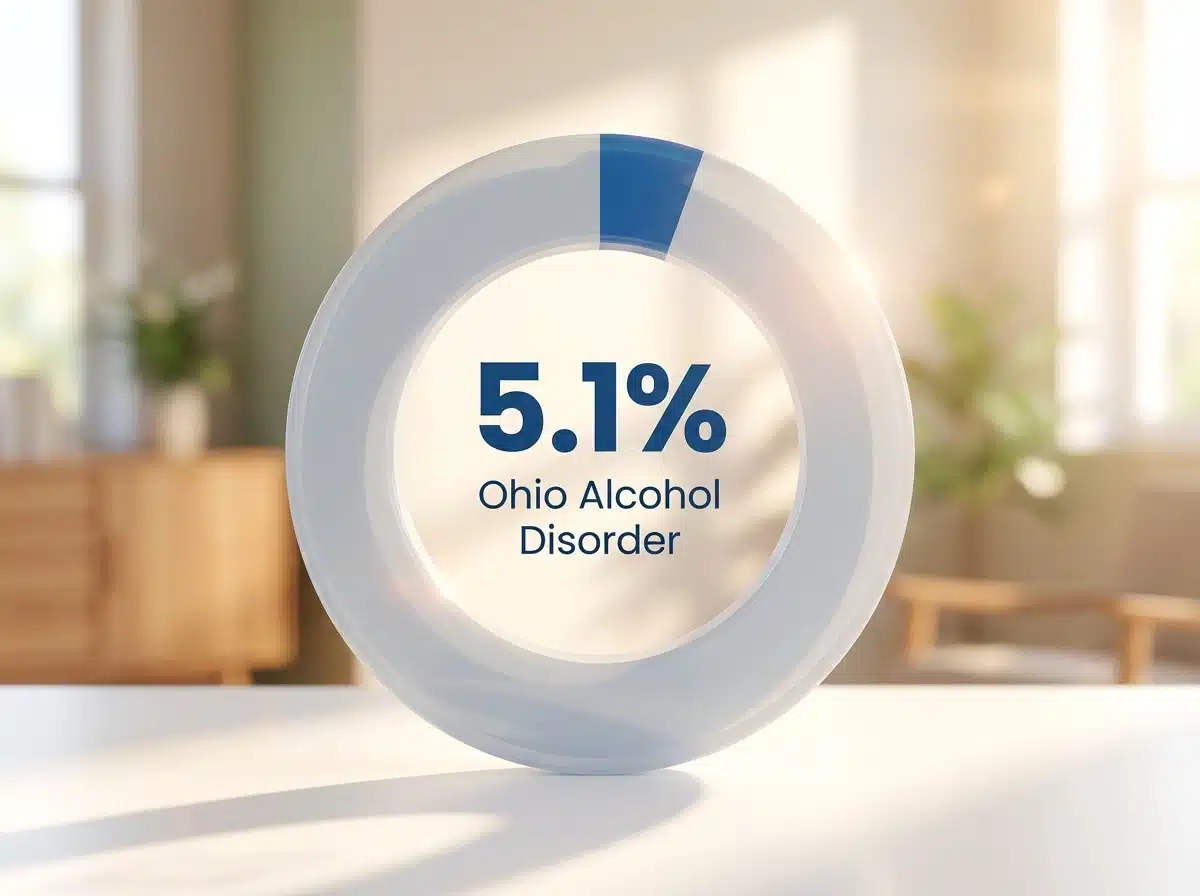
About 6.7% of Ohio residents struggled with alcohol use disorder in 2022, which is noticeably higher than the national average of 5.7%.5 That means over half a million people in Ohio alone could benefit from support—but not everyone can find help close to home.
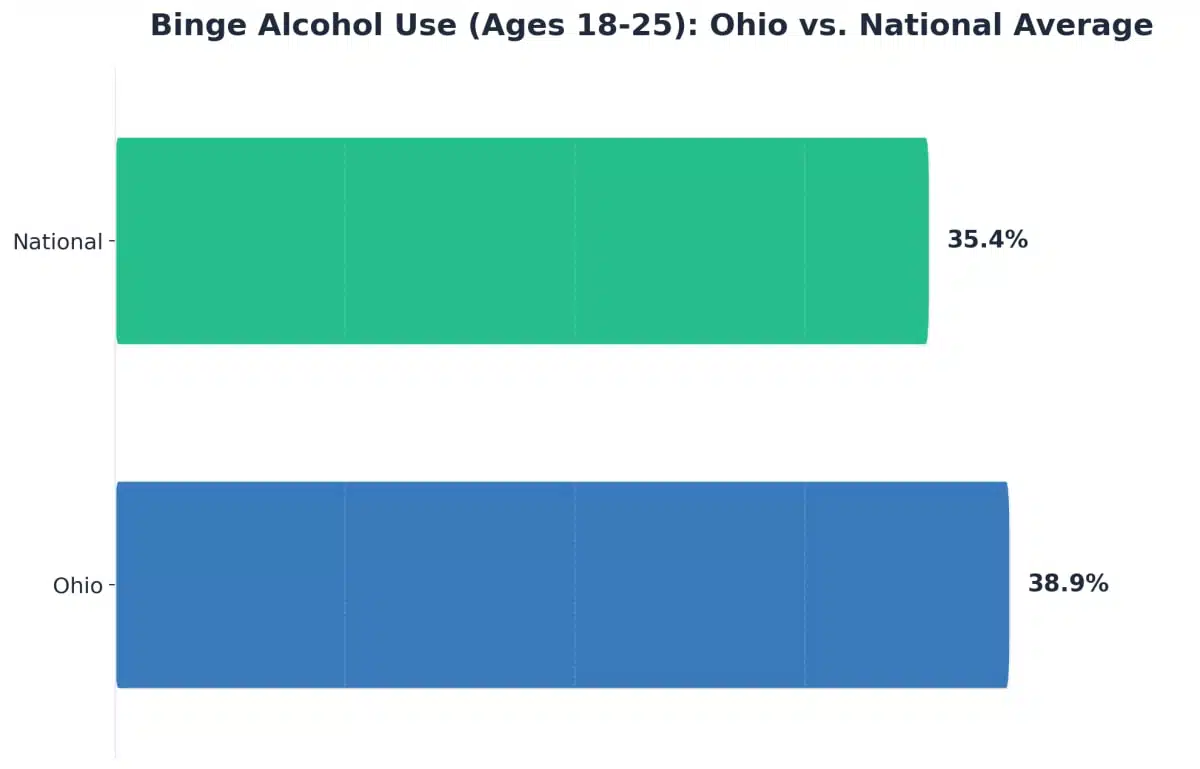
The situation is even more serious for young adults. Nearly 39% of Ohioans aged 18-25 reported binge drinking in the past month, compared to about 35% nationwide.5 This trend puts young people at greater risk for health problems and addiction down the road. For women, the concern is growing too: binge drinking among Ohio women rose 15% from 2010 to 2020.6
Having more choices matters because every person’s recovery path is unique. Some Ohio communities, especially rural areas, have few or no nearby options. As a result, families may struggle to find a rehab for alcoholics near me that fits their needs and location. Telehealth programs are helping close this gap, but in-person care is still limited in some regions.5
Arista understands these challenges. We believe that accessible, high-quality treatment should be available to everyone in Ohio. By expanding options and offering both in-person and virtual support, hope and healing become possible for more families across the state.
Types of Treatment Programs Available in Ohio
When you start searching for a rehab for alcoholics near me in Ohio, you’ll see that there are several types of treatment programs to consider. Each program offers a different level of support, so it’s important to find one that fits your needs and life situation.
The main types you’ll find in Ohio include:
- Inpatient (Residential) Treatment: You stay at the facility full-time, often for several weeks. This option is best for those who need a safe, structured environment around the clock.
- Outpatient Programs: You live at home while attending therapy and group sessions at a clinic, usually several times a week.
- Intensive Outpatient Programs (IOP): A middle ground offering more hours of care than standard outpatient, but you still return home at night.4
Ohio also has detox services for people who need help managing withdrawal symptoms safely. Detox can happen in a hospital, a residential center, or sometimes as outpatient care, depending on your health and the severity of your symptoms.10 Many programs, including those at Arista, blend counseling, group therapy, and sometimes medications to help people build new habits and reduce cravings.4
In recent years, telehealth and virtual recovery programs have expanded in Ohio. These online options help people in rural areas or those with busy schedules get the support they need without traveling long distances.5
Step 1: Assess Needs for Rehab for Alcoholics Near Me
Before choosing a treatment program, you’ll need to honestly evaluate where you stand in your recovery journey. This assessment helps ensure you receive the right level of care—not too intensive, not too light, but perfectly matched to your current situation.

Evaluating Your Severity Level
Start by considering the severity of your substance use. Severe substance use disorder typically involves physical withdrawal symptoms when you stop using—like tremors, nausea, or seizures—along with inability to cut back despite repeated attempts. Moderate substance use disorder might look like weekend binge drinking that’s starting to cause relationship conflicts and missed commitments, but without physical dependence yet. These distinctions help determine whether you might benefit from medical detox, residential treatment, or outpatient services.
| Severity Level | Common Symptoms | Potential Care Level |
|---|---|---|
| Severe | Physical withdrawal (tremors, nausea), daily use, job loss, inability to stop. | Medical Detox, Residential (Inpatient) |
| Moderate | Binge drinking, relationship conflicts, missed obligations, no severe physical withdrawal. | Intensive Outpatient (IOP), Outpatient |
Mental Health Considerations
Your mental health also plays a crucial role in this assessment. According to the Substance Abuse and Mental Health Services Administration, approximately 9.2 million adults in the U.S. experience co-occurring disorders—meaning both a substance use disorder and a mental health condition like depression, anxiety, PTSD, or bipolar disorder. Research shows that integrated treatment addressing both conditions simultaneously produces significantly better outcomes than treating addiction alone, with relapse rates dropping by nearly 40% when mental health issues are properly addressed.
Assessing Your Support System
Think about your support system too. Do you have a stable living environment? Are there people in your life who support your recovery, or are you surrounded by others who still use substances? Your home situation significantly impacts which treatment level will work best. Someone with a supportive home environment might thrive in outpatient care, while someone facing housing instability or living with active users may need residential treatment.
Professional Guidance
If you’re unsure about your needs, that’s completely normal. Most reputable treatment centers in Ohio offer free assessments where trained professionals evaluate your situation and recommend appropriate care levels. These assessments typically include questions about your substance use history, physical health, mental health, and personal circumstances.
Step 2: Use Trusted Resources to Find Facilities
National and State Treatment Locators
Finding the right rehab for alcoholics near me in Ohio often starts with trusted treatment locator tools. These resources are designed to make your search easier, whether you’re looking for support for yourself or a loved one. One of the most helpful tools is SAMHSA’s National Treatment Locator at FindTreatment.gov. This free website allows you to search by city or zip code, filter by the type of care you need, and even look for facilities that accept your insurance or offer payment help.1 You can also call the SAMHSA National Helpline (1-800-662-4357) for confidential guidance, available any time of day.2
Ohio has its own resources too. The Ohio Department of Behavioral Health lists state-licensed treatment centers, so you know you’re looking at providers who meet Ohio’s quality standards.3 This can be especially helpful if you’re new to the process or want to double-check a facility’s credentials. You can also try searching for rehab for alcoholics near me in your preferred search engine to see local maps and reviews.
| Resource | What It Does |
|---|---|
| FindTreatment.gov (SAMHSA) | National search, filters by location and treatment type |
| SAMHSA National Helpline | Free, 24/7 support and treatment referrals |
| Ohio Dept. of Behavioral Health Website | Lists licensed Ohio facilities and explains state resources |
Verify Insurance Coverage and Payment Options
Once you’ve found a rehab for alcoholics near me in Ohio that looks promising, it’s time to figure out how you’ll pay for treatment. Most people in Ohio use health insurance to cover at least part of their care, thanks to important protections from the Affordable Care Act. This means all Marketplace insurance plans—and many employer plans—must include coverage for substance use disorder services, just like any other health condition.8 Medicaid also covers alcohol treatment for those who qualify.
Start by calling the treatment facility or checking their website to see what insurance they accept. Ask if they’re in-network with your plan, as this usually means lower out-of-pocket costs. If you don’t have insurance, don’t lose hope. Many Ohio centers offer payment plans, sliding scale fees, or connect you with state-funded programs to help with costs.3
| Payment Option | What It Covers | How to Access |
|---|---|---|
| Private Insurance | Most or all treatment types | Through your employer or ACA |
| Medicaid | Treatment for those eligible | Apply via Ohio benefits site |
| State Funding/Sliding Scale | Based on income, may cover all or part | Ask facility or county board |
Arista’s intake team can help you check your benefits, explain what’s covered, and guide you to resources if you’re worried about costs.
Step 3: Evaluate Rehab for Alcoholics Near Me Options
Key Questions to Ask Treatment Providers
As you compare different rehab for alcoholics near me options in Ohio, asking the right questions can make all the difference. It helps you understand if a treatment program is a good match for your needs and if it follows safe, evidence-based practices. Here are some key questions you might want to ask when speaking with a provider or touring a facility:
- What types of alcohol addiction treatments do you offer? (Look for programs that include counseling, group therapy, and, when appropriate, medication options like naltrexone or acamprosate.4)
- Are your staff licensed and experienced in treating alcohol use disorder?
- How do you handle co-occurring mental health conditions, like depression or anxiety? People with alcohol use disorder are 2.3 times more likely to have major depression, so this support matters.6
- What does a typical day or week look like for someone in your program?
- How do you involve families in the recovery process?
- What happens if someone relapses during treatment?
- Are telehealth or virtual options available if I can’t attend every session in person?5
Taking the time to ask these questions shows you care about your recovery and helps you spot programs that truly put clients first. Arista encourages you to reach out and ask anything—no question is too small when it comes to your health.
Red Flags and What Makes Quality Treatment
When you’re looking for a rehab for alcoholics near me in Ohio, spotting warning signs at a facility can save you time, money, and unnecessary stress. Be cautious of the following red flags:
- Programs that promise a “quick fix” or guarantee a cure—recovery is a journey, not an overnight change.
- Staff who cannot provide clear credentials or avoid answering questions about treatment methods.
- Centers that don’t offer individualized plans or use only one approach for every client. Top programs tailor care to your unique needs.4
- A lack of support for mental health or medical issues. Since people with alcohol use disorder are more likely to struggle with depression or anxiety, high-quality programs have staff who understand both.6
- Lack of transparency regarding costs, services, and expectations.
Quality treatment centers stand out by using proven therapies, offering a mix of counseling and group support, and keeping family members involved when possible. At Arista, we meet Ohio’s high standards for licensing, and our team focuses on evidence-based care every step of the way.
Frequently Asked Questions
Can I get alcohol treatment in Ohio if I don’t have insurance?
Yes, you can get alcohol treatment in Ohio even if you don’t have insurance. Many rehab for alcoholics near me centers offer help through state funding, sliding scale fees based on your income, or special programs for people without coverage.3 You can ask the facility about these options, or contact your county’s mental health and recovery board for guidance. Ohio also has public programs and grants that help remove cost barriers so everyone can access care. At Arista, we’ll walk you through all the available resources and help you find a solution that works. Hope and support are within reach, no matter your situation.
What if I’ve tried rehab before and relapsed—will treatment still work for me?
If you’ve gone through rehab for alcoholics near me in Ohio and relapsed, you are not alone—and it does not mean treatment has failed. Relapse can be a normal part of recovery, with many people needing more than one try before finding lasting change.4 Every attempt teaches you something new about what works for you and what extra support you might need. Programs like Arista use evidence-based therapies and can adjust your plan if you’ve returned to drinking. The most important thing is not to give up hope. With the right tools and a supportive team, recovery is always possible—even after setbacks.
How long does alcohol rehab typically last in Ohio?
The length of alcohol rehab in Ohio depends on the type of program and your personal needs. Inpatient or residential programs often last from 28 to 30 days, but some people stay for 60 days or even longer if they need extra support. Outpatient programs can range from a few weeks to several months, with flexible schedules so you can keep up with work or family. Intensive outpatient programs (IOPs) usually meet several times a week for about 8 to 12 weeks.4 The right rehab for alcoholics near me should offer a plan that fits your unique situation. At Arista, we help you find a program and length that works for you and your recovery goals.
Can I attend alcohol treatment while still working or caring for my family?
Yes, you can attend alcohol treatment in Ohio while still working or caring for your family. Many rehab for alcoholics near me centers offer flexible outpatient programs and intensive outpatient programs (IOPs) that fit around job and family schedules.4 These options let you live at home and attend therapy sessions during the day or evening, so you don’t have to pause your responsibilities. Virtual treatment is also growing in Ohio, which can save travel time and make support more accessible.5 Arista understands how important it is to balance recovery with daily life, and our team will help you find a program that works for you.
What happens if I also struggle with depression or anxiety along with alcohol addiction?
If you’re facing both alcohol addiction and depression or anxiety, you’re not alone. In Ohio, people with alcohol use disorder are 2.3 times more likely to also struggle with major depression.6 The best rehab for alcoholics near me will treat both conditions at the same time, so you don’t have to choose which one to focus on first. This is called “dual diagnosis” care, and it often includes therapy, support groups, and sometimes medication for mental health. At Arista, our team understands how these challenges can affect each other, and we work with you to build a plan that supports your whole well-being. Recovery is possible, even if you’re dealing with more than one issue.
Are medications like naltrexone or acamprosate available at Ohio treatment centers?
Yes, many Ohio treatment centers offer FDA-approved medications like naltrexone and acamprosate to help with alcohol recovery. These medicines are used to lower cravings and make it easier to stay away from drinking. Not every rehab for alcoholics near me will use medications, but top programs—like Arista—make them available when they fit your needs. This approach is called medication-assisted treatment and can be combined with counseling and support groups for the best results.4 If you’re interested in these options, ask your treatment provider if they offer them and how they work as part of your recovery plan.
How can I help a loved one who refuses to admit they need alcohol treatment?
Supporting a loved one who doesn’t see their need for alcohol treatment can be heartbreaking. You can start by gently sharing your observations—mention changes you’ve noticed in their mood, health, or relationships. Use “I” statements, such as “I’m worried about you,” instead of blaming or lecturing. Sometimes, people refuse help because they fear judgment or feel ashamed. Let them know that seeking a rehab for alcoholics near me in Ohio isn’t a sign of failure—recovery is always possible. Offer to research options together, or reach out to a provider like Arista for advice on next steps. Family support makes a real difference in encouraging treatment and recovery.4
Start Your Recovery Journey in Ohio Today
Taking the first step toward recovery can feel overwhelming, but you don’t have to navigate this journey alone. Ohio provides multiple pathways to access addiction treatment support. The Ohio Department of Mental Health and Addiction Services operates a 24/7 helpline at 1-877-275-6364, offering confidential assistance in connecting you with local treatment providers. Additionally, the national SAMHSA helpline (1-800-662-4357) provides free, year-round support for individuals and families facing substance use challenges.
When exploring treatment options, you’ll find programs ranging from outpatient counseling that allows you to maintain work and family commitments, to intensive residential care that provides 24/7 support during early recovery. Many Ohio facilities also specialize in addressing co-occurring mental health conditions—an important consideration since approximately 50% of individuals with substance use disorders also experience mental health challenges. Understanding what different treatment approaches offer helps you identify the level of care that aligns with your current circumstances and recovery goals.
If you or someone you love is struggling with substance use, don’t wait for the “perfect” moment to seek help. That moment is now. Reach out to a treatment provider or helpline to discuss your options, ask questions about what to expect, and begin building a path toward lasting recovery. Recovery is possible, and it starts with a single conversation. Your future self will thank you for the courage you show today.
References
- SAMHSA’s National Treatment Locator. https://findtreatment.gov
- SAMHSA’s National Helpline. https://www.samhsa.gov/find-help/helplines/national-helpline
- Ohio Department of Behavioral Health (formerly Ohio Department of Mental Health and Addiction Services). https://dbh.ohio.gov
- National Institute on Alcohol Abuse and Alcoholism – Treatment for Alcohol Problems. https://www.niaaa.nih.gov/publications/brochures-and-fact-sheets/treatment-alcohol-problems-finding-and-getting-help
- SAMHSA Behavioral Health Barometer – Ohio. https://www.samhsa.gov/data/sites/default/files/reports/rpt32852/Ohio-BH-Barometer_Volume6.pdf
- Health Policy Institute of Ohio – Alcohol, Tobacco, and Cannabis. https://www.healthpolicyohio.org/our-work/facts-figures/alcohol-tobacco-and-cannabis
- The ASAM Criteria – Fourth Edition. https://www.asam.org/asam-criteria
- Healthcare.gov – Mental Health and Substance Abuse Coverage. https://www.healthcare.gov/coverage/mental-health-substance-abuse-coverage/
- Ohio State University STAR Program – Statewide Support Resources. https://medicine.osu.edu/departments/psychiatry-and-behavioral-health/star/statewide-support-resources
- An Overview of Outpatient and Inpatient Detoxification. https://pmc.ncbi.nlm.nih.gov/articles/PMC6761814/
