 Now under new ownership & part of the Arista Recovery Network! For more information,

Key Takeaways
- Fentanyl has replaced heroin across the Columbus metro and Franklin County, with Ohio’s synthetic opioid death rate running roughly double the national average 2.
- Hilliard families should weigh providers based on medical detox capabilities, experience with buprenorphine micro-induction after fentanyl use, and access to all three MOUD options 5.
- Before calling a program, compare what commercial insurance and Ohio Medicaid actually cover, since the Section 1115 waiver extends to detox, residential, MOUD, and outpatient care 9.
- Local protections matter: Ohio’s Good Samaritan law shields overdose callers from minor possession charges, while naloxone and legalized fentanyl test strips are available through pharmacies and Project DAWN.
Finding Hope Amidst a Fentanyl Crisis in Central Ohio
If you’re grappling with the reality of fentanyl addiction impacting a loved one in central Ohio, you’ve found a resource designed to guide you. The fear you’re experiencing is a valid response to the current landscape of drug use in our community. However, it’s crucial to know that a path to recovery exists, and many individuals in Hilliard successfully navigate it every week.
Medical detox offers a safe and manageable way through withdrawal. Effective medications are available that can significantly reduce the risk of overdose. Furthermore, insurance and Ohio Medicaid often cover more treatment options than families realize, making care accessible.
For immediate support, SAMHSA’s National Helpline is a free, confidential resource available 24/7 at 1-800-662-HELP 7. This guide will help you understand the next steps in addressing fentanyl addiction.
The Evolving Landscape of Drug Use in Ohio
The drug supply in Ohio has undergone a significant transformation. The substances available in the Columbus metro area today are far more dangerous than those a decade ago. Illicitly manufactured fentanyl has largely replaced heroin, leading to a surge in overdose deaths among individuals who may not have perceived themselves at high risk.
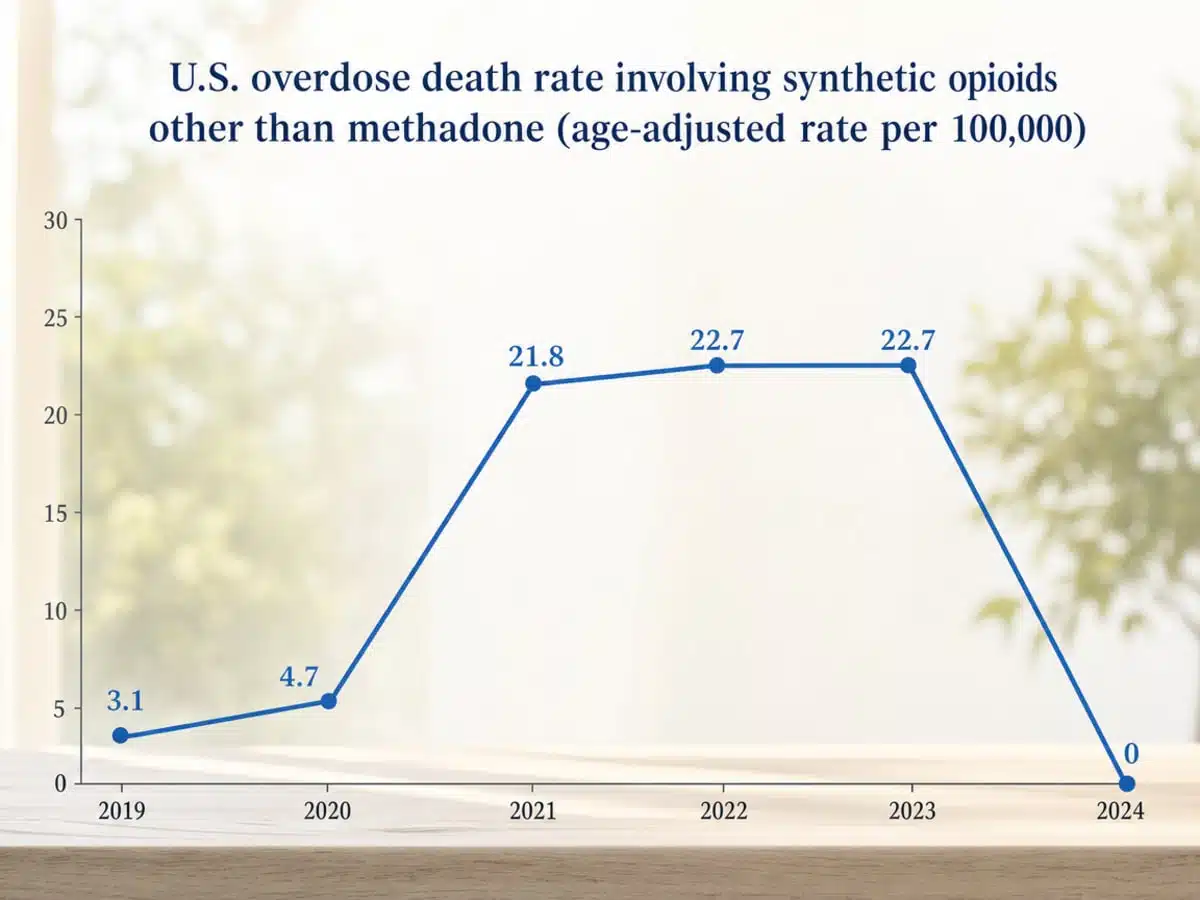
Ohio’s age-adjusted death rate from synthetic opioids, predominantly fentanyl, increased from approximately 30.0 per 100,000 in 2019 to roughly 49.0 per 100,000 in 2023, according to CDC provisional surveillance. This rate has consistently been about double the national average, which rose from 3.1 to 22.7 per 100,000 during the same period 2. This stark difference means that the fentanyl circulating in Hilliard, Dublin, Grove City, and across Franklin County is part of a supply that is disproportionately affecting Ohioans.
Another critical difference is the speed at which fentanyl acts. Unlike heroin, which might allow a window of 30 to 40 minutes for intervention, fentanyl can cause breathing to stop within two to three minutes. This rapid onset underscores the urgency of every step in the recovery process, from recognizing withdrawal to initiating protective medications.
The treatment landscape has also evolved to meet these new challenges, offering more effective interventions than ever before.
Understanding the Dangers: Fentanyl, Carfentanil, and Xylazine
The primary concern for families in Ohio is the prevalence of illicit fentanyl. In 2023, fentanyl or its analogs were involved in 78% of unintentional drug overdose deaths in Ohio, often in combination with other substances 1. These statistics reflect what was actually present in individuals’ bodies at the time of death, highlighting the pervasive danger.
Beyond fentanyl, xylazine, a veterinary sedative, is increasingly found in the drug supply. Approximately 10% of unintentional overdose deaths in Ohio have been linked to xylazine adulteration 8. Xylazine is not an opioid, meaning naloxone does not reverse its sedative effects, though naloxone should still be administered in any suspected overdose due to the likely presence of fentanyl. Xylazine can also cause severe skin wounds at injection sites.
Carfentanil, a synthetic opioid significantly more potent than fentanyl, has also reemerged in Ohio drug cases, as warned by the Ohio Attorney General’s office in September 2023 8. These substances cannot be identified by sight, meaning individuals are often unaware of what they are consuming. Effective treatment must acknowledge this reality, rather than relying on outdated assumptions about the drug supply.

Fentanyl Withdrawal: Why Medical Supervision is Essential
Fentanyl withdrawal presents unique challenges compared to withdrawal from other opioids like heroin or prescription pills. Fentanyl’s tendency to store in fatty tissues means it can re-enter the bloodstream for an extended period after last use. This prolongs the withdrawal timeline: early symptoms can be more severe, the peak can last longer, and post-acute symptoms like insomnia, anxiety, and cravings can persist for two to three weeks.
Physically, withdrawal can manifest as:
- intense body aches
- restless legs
- profuse sweating
- severe vomiting and diarrhea leading to dehydration
- a rapid heart rate
Psychologically, the distress can be profound, often described as feeling like death. These physical and mental challenges make unsupervised withdrawal dangerous and often lead to relapse, which carries a high risk of overdose due to reduced tolerance.
Medical detox provides 24-hour clinical care to manage these symptoms. Staff can treat dehydration, stabilize blood pressure, alleviate muscle pain and insomnia, and initiate medications for opioid use disorder (MOUD) to shorten the most severe phase of withdrawal 4. This supervised environment offers crucial support, preventing individuals from facing the intense urge to use alone.
Medications for Fentanyl Addiction: A Path to Recovery
Medications for Opioid Use Disorder (MOUD) are a cornerstone of effective fentanyl addiction treatment. These medications significantly reduce opioid use, prevent overdose deaths, and improve overall health outcomes when combined with counseling and behavioral therapies 4. For individuals whose bodies have adapted to fentanyl, MOUD can be critical for navigating the early stages of recovery and beyond.
Ohio’s mental health and addiction services agency identifies three primary MOUD options: methadone, buprenorphine, and naltrexone 3. Each works differently and is suited to various individual needs and circumstances. A comprehensive treatment team will discuss all options to determine the best fit for your loved one.
Understanding Buprenorphine, Methadone, and Naltrexone
- Buprenorphine
- Found in medications like Suboxone, partially activates opioid receptors, effectively reducing cravings and withdrawal symptoms without producing a euphoric high. It is widely accessible, as certified providers can prescribe it in outpatient settings. It can be taken daily as a film or tablet, or as a monthly injection.
- Methadone
- Fully activates opioid receptors in a controlled manner. It is dispensed through licensed opioid treatment programs, often requiring daily clinic visits initially. This structured approach can be beneficial for individuals with extensive fentanyl exposure and a need for consistent support.
- Naltrexone
- Available as a monthly injection (Vivitrol), completely blocks opioid effects. Because it requires an individual to be fully opioid-free for 7 to 14 days before initiation, it is typically started after detox rather than during active withdrawal.
Navigating Buprenorphine Induction After Fentanyl Use
A critical consideration when initiating buprenorphine after heavy fentanyl use is the risk of precipitated withdrawal. This occurs when buprenorphine rapidly displaces residual fentanyl from opioid receptors, leading to a sudden and severe worsening of withdrawal symptoms. While not life-threatening, it is extremely uncomfortable and can deter individuals from continuing treatment.
In 2023, the American Society of Addiction Medicine recognized the need for individualized strategies for buprenorphine initiation in those using high-potency synthetic opioids 5. This means that a standard induction protocol may not be appropriate. Some treatment teams may delay the first dose, while others use low-dose or micro-induction schedules, gradually increasing the buprenorphine amount over several days, sometimes even while the individual is still using or receiving other medications.
It is important to seek providers who are knowledgeable about these adapted protocols, as fentanyl has changed the traditional approach to buprenorphine induction.
The Continuum of Care: Detox, Residential, Outpatient, Aftercare
Effective recovery from fentanyl addiction typically involves a structured progression through different levels of care. This journey can be visualized as a series of interconnected steps:
Medical detox is the initial phase, usually lasting 5 to 10 days. During this time, 24-hour clinical staff manage physical withdrawal symptoms, ensure safety, and often begin MOUD. Detox is not a standalone treatment but a critical first step that prepares an individual for further care.
Residential treatment often follows, typically for 28 days or longer. Individuals live on-site, engaging in individual and group therapy, medication management, and developing coping skills. This immersive environment is particularly beneficial for those recovering from heavy fentanyl use, as it provides a stable setting to manage prolonged cravings and post-acute withdrawal symptoms away from daily stressors.
Outpatient care serves as a step-down, transitioning individuals back into their daily lives with ongoing support. This can include intensive outpatient programs (IOPs) with multiple weekly sessions, or standard outpatient care with less frequent therapy and medication appointments. The goal is to integrate recovery support into a normal routine.
Aftercare encompasses the long-term support systems essential for sustained recovery. This includes participation in recovery groups, building a sober community, maintaining relationships with healthcare providers, and fostering healthy family communication. Aftercare is crucial for solidifying the gains made in earlier treatment stages.
Funding Treatment in Franklin County: Insurance and Medicaid
Concerns about the cost of treatment are common, but the financial landscape for addiction care in Ohio has improved significantly. Many families find that treatment is more accessible than they initially believe.
For those with commercial insurance through employers in the Columbus area (e.g., Aetna, Anthem Blue Cross Blue Shield, Cigna, UnitedHealthcare), fentanyl detox and residential treatment are typically covered under behavioral health benefits. Coverage details, such as deductibles and copays, vary by plan and network status. Before contacting a treatment center, have the member ID number ready; reputable programs can perform a benefits check to provide a clear cost estimate.
Ohio Medicaid offers extensive coverage for addiction treatment. Under a Section 1115 demonstration waiver, Ohio has expanded Medicaid coverage to include a full spectrum of substance use disorder services, including inpatient and residential care 9. This means that a Medicaid-enrolled resident of Hilliard can typically access medical detox, residential treatment, MOUD, and outpatient counseling without out-of-pocket costs. Many individuals in active addiction may qualify for Medicaid without realizing it, especially if their income has decreased.
Even without insurance, options are available. Most Ohio treatment programs have admissions teams dedicated to exploring funding solutions, including same-day Medicaid enrollment and sliding-scale payment plans. SAMHSA’s National Helpline 7 can also direct you to programs in Franklin County that serve uninsured patients. Financial barriers are rarely insurmountable; a phone call is often the first step to finding a solution.

Key Ohio Laws: Good Samaritan, Naloxone, and Test Strips
Understanding Ohio’s laws regarding overdose and drug use can alleviate fears and encourage timely intervention. These protections are designed to save lives.
Ohio’s Good Samaritan law protects individuals who seek emergency help during an overdose from being charged with minor drug possession. This protection applies if they cooperate with responders and act in good faith. While it doesn’t cover all offenses like trafficking or outstanding warrants, it ensures that calling 911 for an overdose will not result in arrest for minor possession. Always call for help in an overdose situation.
Naloxone (Narcan), an opioid overdose reversal medication, is available in Ohio without a prescription. Most chain pharmacies in Hilliard stock it, often behind the counter, requiring you to ask the pharmacist directly. Additionally, Project DAWN sites across Franklin County distribute naloxone for free. It is highly recommended to keep at least two doses on hand if a loved one is using opioids, as fentanyl overdoses may require multiple doses.
Fentanyl test strips were legalized in Ohio in 2023. These strips allow individuals to check substances for the presence of fentanyl before use, serving as a crucial harm-reduction tool while someone is on their journey toward treatment.
Immediate Steps for the Next 24 Hours
Focus on the immediate next steps, rather than overwhelming yourself with long-term plans:
If an overdose is occurring right now: Call 911 immediately. Administer naloxone if available. Stay with the person and roll them onto their side. Remember, Ohio’s Good Samaritan law provides protection for seeking emergency help.
If the crisis is not immediate: Gather the insurance card or note “Ohio Medicaid.” Contact a treatment program in the Columbus area and inquire about detox bed availability and a benefits check. If you encounter voicemail or delays, call SAMHSA’s National Helpline at 1-800-662-HELP 7 for free, confidential, 24-hour assistance.
Prepare a small bag for your loved one with their ID, insurance card, a few changes of clothes, a phone charger, and a list of any current medications. Share what is happening with a trusted individual; you don’t have to face this alone.
If you are the individual struggling with fentanyl use and reading this, reaching out is a courageous step. Arista Recovery in Hilliard is available to answer your call, as is the SAMHSA helpline. Both offer a starting point for recovery.
Speak with a Local Fentanyl Recovery Specialist
Connect quickly for a confidential assessment and immediate support from experienced Ohio professionals.
Frequently Asked Questions
How long does fentanyl withdrawal last?
Acute physical symptoms of fentanyl withdrawal, such as sweating, vomiting, muscle pain, and restlessness, typically peak between days two and four and gradually subside over 7 to 10 days. However, because fentanyl is stored in fatty tissue, residual effects can prolong the withdrawal experience. Sleep disturbances, anxiety, and cravings often persist for two to three weeks. Medical detox can significantly alleviate the severity and duration of these symptoms by providing direct treatment and initiating medication for opioid use disorder during active withdrawal 4.
Can buprenorphine be started after using fentanyl?
Yes, buprenorphine can be started after fentanyl use, but the method of initiation is crucial. Heavy fentanyl use increases the risk of precipitated withdrawal, a severe worsening of symptoms that occurs if buprenorphine displaces fentanyl too quickly from opioid receptors. The American Society of Addiction Medicine noted in 2023 that individualized induction strategies, including low-dose or micro-induction, may be necessary for individuals using high-potency synthetic opioids 5. An experienced treatment team will tailor the approach to your specific situation.
Does Ohio Medicaid cover fentanyl detox and residential treatment in Franklin County?
In most cases, yes. Ohio operates under a Section 1115 demonstration waiver that has expanded Medicaid coverage to include a comprehensive range of substance use disorder services. This includes medical detox, residential treatment, MOUD, and outpatient counseling 9. Residents of Hilliard enrolled in Medicaid can typically access these services without out-of-pocket costs. Admissions teams at most programs can verify coverage on the same day and assist with enrollment if needed.
If I call 911 during an overdose, can I be arrested for drug possession in Ohio?
Ohio’s Good Samaritan law provides protection for individuals who seek emergency help during an overdose. As long as you cooperate with responders and act in good faith, you are protected from charges of minor drug possession. This law does not cover trafficking charges or outstanding warrants, and there are limits to its repeated use. However, for an immediate overdose situation, the law is designed to encourage calls for help without fear of arrest for minor possession. Always make the call.
Are fentanyl test strips legal in Ohio, and where can I get naloxone in Hilliard?
Fentanyl test strips were legalized in Ohio in 2023, allowing individuals to check substances for fentanyl before use. Naloxone (Narcan) is available without a prescription at most chain pharmacies in Hilliard; ask the pharmacist, as it is often kept behind the counter. Project DAWN sites throughout Franklin County also distribute naloxone for free. It is advisable to keep at least two doses on hand, as fentanyl overdoses may require more than one.
Is medical detox alone sufficient to treat fentanyl addiction?
No, medical detox alone is not sufficient for treating fentanyl addiction. While detox effectively manages withdrawal symptoms, it does not address the underlying brain adaptations caused by fentanyl. Furthermore, tolerance decreases rapidly after detox, increasing the risk of fatal overdose if an individual relapses. SAMHSA’s guidelines emphasize that the most successful outcomes are achieved when medications are combined with counseling and behavioral therapies 6. Detox is a crucial first step, but it must be followed by comprehensive care, including residential treatment, MOUD, and ongoing aftercare, to support lasting recovery.
References
- Drug Overdose – Ohio Department of Health. https://odh.ohio.gov/know-our-programs/violence-injury-prevention-program/drug-overdose
- Vital Statistics Rapid Release: Provisional Drug Overdose Death Counts. https://www.cdc.gov/nchs/nvss/vsrr/drug-overdose-data.htm
- Medication-assisted Treatment. https://dbh.ohio.gov/get-help/treatment-services/medication-assisted-treatment/
- TIP 63: Medications for Opioid Use Disorder – Full Document. https://www.samhsa.gov/resource/ebp/tip-63-medications-opioid-use-disorder
- ASAM Clinical Considerations: Buprenorphine Treatment of Opioid Use Disorder for Individuals Using High-Potency Synthetic Opioids. https://pubmed.ncbi.nlm.nih.gov/37934520/
- Treatment Options for Substance Use Disorder. https://www.samhsa.gov/substance-use/treatment/options
- National Helpline for Mental Health, Drug, Alcohol Issues. https://www.samhsa.gov/find-help/helplines/national-helpline
- Warning Issued for Reemerging Synthetic Opioid in Ohio. https://www.ohioattorneygeneral.gov/Media/News-Releases/September-2023/Warning-Issued-for-Reemerging-Synthetic-Opioid-in
- Ohio Section 1115 Demonstration Waiver for Substance Use Disorder Treatment. https://www.medicaid.gov/medicaid/section-1115-demo/demonstration-and-waiver-list/82901
